Friday, December 30, 2016

December 29, Surgery Day


Alarm at 4:30 a.m. MST. Surgery scheduled for 8 a.m. Have to check in at 6. Kinda like catching a flight. While the airport is an hour away with traffic, the hospital is only 15 minutes. So much closer. But not more reassuring. Only a shorter trip to think of my mortality.

It's my cousin Gerald's birthday. Then it's a good day to have surgery because good things happen on this date. A good omen.

Not that I'm superstitious. Like Tuon the Seanchan Princess/Empress "may she live forever" in Robert Jordan's Wheel of Time fantasy series. She is a strong, brave, independent woman who believes in omens. I'm reading the fourteenth and final book in the series. It's my third time through. WoT is my security blanket. No matter what turns my life is taking or what else I might be reading, I can always go back to WoT. There I am spirited away to a world where the wheel turns as the wheel wills and good conquers evil.

4:35 I took my shower with the special antiseptic wash. Dry with a clean towel. Don clean clothes. Because knee replacement involves the implanting of a foreign material into my body, I must be especially careful of the possibility of infection. For the rest of my life.

I didn't turn the 4:30 news on.The news folk will only talk about Debbie Reynolds. She died yesterday. The day after her daughter died. Carrie Fisher, another Princess. Whose character in another fantasy series is strong and independent and brave. And she is younger than I. There's that mortality thing again.

My computer bag was packed -- my laptop, two changes of clothes.

Loose fitting clothes like the nurse who taught the pre-op class said. My exercise class clothes. We didn't have exercise class Monday because it was the day after Christmas and even exercise class teachers deserve a day off now and again. But I walked with my walking group Tuesday and we went to Panera's after.

The exercise class is for my physical well-being. The walking and good food amidst good friends is for my mental well-being. One of the walkers -- technically, she doesn't usually walk with us, but she often meets us for coffee after -- was worried. She'd had a lipoma on her back for many years and now it had started hurting. She was worried that it may have become cancerous. She was having to wait until Wednesday to see her doctor. Dammit.

A reminder of our mortality.

And I had to wait until Thursday, the 29th.

The paperwork was safely stowed in the computer bag. A copy of my Advance Directive and one of my Durable Medical Power of Attorney. Just in case. My chances of surviving a total knee replacement were excellent. But one of my husband's good friends had a fairly routine back surgery last month. He threw a blood clot and died.

Another reminder.

My husband drove me to the hospital and our daughter met us there. We did not mention mortality.

Three chargers were in my bag. One for my cell phone, one for my e-reader, and one for my laptop. I would need to call my son and my brother and my uncle to let them know how the surgery went. And I would need my reader so I could read myself to sleep -- I was on page 343 of 894 in that last Wheel of Time book. I had emails of good wishes to answer. And blog posts and short fiction and books to write.

Bye-the-by, my walking group friend has shingles. Not fun, but not cancer either.

And I now have a new knee.

Saturday, December 17, 2016

I'm Curious

image from oaktable.net

I'm curious.

This blog is intended to explore the work of writing, to showcase my own flash fiction and flash nonfiction.

But if you know writers, you know we'll write about everything. Well, I don't usually do recipes or the best way to get grass stains out of football uniforms. It must have been a man who ever imagined white was a good idea for football uniforms.

If you don't mind, would you please leave a comment and let me know where you are in this world, why you read my blog, and which kinds of my posts you particularly like.

Thank you.


Weather! -- Nonfiction


Who is this mystery man?

Me? I write mysteries. And a man like this can be inspiring. Dressed like this and entering a convenience store or, God forbid, a bank, this man would draw all kinds of unwelcome attention. But, dear friends, this is my husband dressed to do battle today. In our neighborhood. We had 8.5 inches of snow, the biggest so far this season. That's official because he measured it.

     
         This is my neighborhood, a view from my desk.                  And this is how my bad cat
                                                                                                    Kocka enjoys the view.

As I write this we have warmed up to 3 degrees Fahrenheit. Thank goodness the wind is not blowing or it would feel even colder than it does. And it feels pretty darn cold.

The writing gurus exhort us to avoid writing weather. The old "dark and stormy night" thing.

But, having grown up in Tornado Alley, the weather has been an important character in the story of my life. The last thing I watch at night is the local weather forecast and then, again, the first thing in the morning. I quickly develop strong preferences for this meteorologist over that one. I think I would recognize them anywhere -- even at the dentist's office, and Goodness knows I go deaf, dumb, and blind the minute I pass through the doors to my dentist's office.

In Oklahoma, where super cell tornadoes can be a problem, we watched for the local TV stations' helicopters and storm tracker trucks. If David Payne, an Oklahoma City meteorologist, passed you on the highway in bad weather, the best thing to do is to turn around 'cause wherever he's going, you don't want to be there.

Now I live southwest of and a little more than 600 feet above Denver, Colorado, where they give the weather by altitude. Even if you don't watch the weather news, all those pickup trucks running around town with blades on the front should be warning enough. It's gonna snow.

There are some good things about snow in Colorado. One of our major industries is tourism fueled in the winter by skiers and snowboarders. And, although Denver is located on America's High Plains Desert, we have snow melt for the water necessary to modern life. After last night the snow pack in our watershed the South Platte will be at more than 100% of average.

Another good thing is the large force of experienced snowplow drivers ready, willing, and able to come out in the cold and dark and clear our highways and streets. Luckily we live on a street that is regularly plowed so we've never been trapped in our home by the snow.

And down here where we live, the sun comes out the next day or second day after at the most, and dries the streets and warms us so that coats are usually not necessary. Regardless of the ambient temperature, we can resume our outdoor lives.

On mornings like this, I wake before dawn with soft white light sifting through the blinds. It's not moonlight. It's snowlight. I'm surrounded by the hum of the heater promising me safety from the cold. I lie in bed listening for the first snowplow to break the quiet of the neighborhood. It moves on, leaving no shadow of its sound.


This snow was different. The flakes were so tiny and so dry that they didn't stick together at all. They fell through the openings on the picnic table and between the floor boards on the deck. Only where they stacked up on the railing did we get an idea of how much snow had fallen.

                       
Yep, that's my husband. He cleared our driveway and the sidewalks around our house and in front of our neighbors' houses. He actually worked up a sweat following that snowblower. The neighbors here do that for each other. Last snowfall it was our neighbor Heather with a double-wide snow shovel who cleared our walk and drive.

It's now midday. We've warmed up to six degrees. The sun is not yet out, but the clouds are thinning and the future promising. There's the odd car, now and then, breaking the silence on our street. Tomorrow will be sunny and warmer. We're supposed to get up to 30 degrees.

Hope y'all can enjoy your winter as much as I'm enjoying mine.


Tuesday, December 13, 2016

The 4th Estate and the 1st Amendment

Investigative Journalism,image from UNESCO

The term The Fourth Estate is used to refer to the press and, in today's world, to television and radio news, and internet news sources. According to 19th Century Scottish philosopher Thomas Carlyle, the term was first used by Edmund Burke in a parliamentary debate in 1787 on whether to open the House of Commons to reporters. Burke said "there were Three Estates in Parliament; but, in the Reporters’ Gallery yonder, there sat a Fourth Estate more important far than they all.”

Four years later, Amendment I to the United States Constitution was adopted, recognizing and protecting five rights necessary to sustaining the freedom of a people to govern themselves. It reads:

     "Congress shall make no law respecting an establishment of religion, or prohibiting
       the free exercise thereof; or abridging the freedom of speech, or of the press; or the
       right of the people peaceably to assemble, and to petition the government for a
       redress of grievances."

These civil rights were originally intended to protect individuals from laws made by the U.S. Congress -- the Senate and House of Representatives. Of course in those days that meant only white men. Not women, not slaves, not Native Americans, etc. etc. etc.

Gradually, those civil rights have become recognized as belonging to the rest of us. And now they protect us from State and Local governments as well as the Federal Government. We achieved that recognition as a result of people exercising those rights before they were officially law. Exercising them at great risk to themselves, their families, and their livelihoods.

An educated electorate is necessary to oversee our elected government. By educated I do not mean certified by some educational institution. I mean we need to know what our government leaders and employees are doing. This is where The Fourth Estate comes in.

We don't have time in our own lives to attend our respective state houses on a daily basis while they are in session. And most of us live too far from D.C. to observe Congress, or the Supreme Court while they're in session. We, as individuals, have no access to the President as he conducts the daily business of our nation.

We do have access to proposed laws and regulations if we want to take the time necessary to look them up online. We can opt to watch Congressional debates and hearings on CSPAN. We can read Supreme Court decisions, including dissenting opinions, again online. But we can't question the people arguing in those debates and participating in those hearings. We usually don't have access to experts who can discuss or explain the pros and cons of this law or that regulation. Often, because our thoughts as rightfully caught up in our own affairs, we don't take time to even imagine how actions they take and decisions they make might directly affect us.

Because I am retired, I probably have more time to do these things. I'm seldom too tired to watch anything more demanding on TV than 'Dancing with the Stars.' But many of my fellow citizens are. I don't usually need to decompress from my real-life life by playing 'Minecraft' or 'Sims.' But many of my neighbors and friends do.

Whatever our situation, we need a free press to keep us informed about the business of government -- not just the national government as it operates in D.C. But as it protects me and mine on the open seas and the battlefields and in the foreign government and corporate offices of the whole wide world. As it functions on my neighborhood streets by monitoring the safety of our automobiles. As it operates in my kitchen by monitoring the safety of our food. As it works in the medicine chest over my bathroom sink by monitoring the safety of my prescription medications.

I need a free press to keep me informed about the business of government at my State Capital. As it works with the Federal Government and on its own. I need them to help keep track of my local government, my local school board, my state and local courts.

Our Federal, State, County, and City governments are all there to take care of OUR communal business and it is ultimately our responsibility to oversee their work. There's no way we can keep up with them without the much maligned 'media.'

From the beginning of our Republic our Fourth Estate has been shot through with news people more concerned with selling ads and papers. Easy news costs less to collect and is less likely to alienate advertisers and patrons. It means more profit for the news provider. News like who got a ticket for speeding, which local society dame attended what cotillion, who died and when their funeral is scheduled, how the local sports teams are doing, what building permit has been issued, and how much black-baldies are selling for a-hundred-weight. It's all news of interest to somebody.

Then there is the sensational news guaranteed to attract news consumers and thereby sell ads. This news is also fairly easily and inexpensively come by. News about which celeb is in trouble with the law, who's sleeping with whom especially if they have some sort of celebrity status, or shocking declarations from someone with or without legitimate standing that are guaranteed to incite public passions. Again news of interest to someone.

Then there is investigative reporting. That's when news people spend time and resources exploring illegal, unethical, and/or immoral practices by people in responsible positions within our core institutions. This is the news that brings The Fourth Estate into its own. It's usually not easy and seldom inexpensive. On top of that, the results may not be popular or pleasant.

In the mid 1800s Harper's Weekly exposed New York City's corrupt Tammany Hall machine. They reported in print and Thomas Nast's political cartoons, taking aim at the political machine's head honcho.


Pretty good resemblence, doncha think? Boss Tweed is reported to have said "I don't care a straw for your newspaper articles, my constituents don't know how to read, but they can't help seeing them damned pictures." He didn't want people to 'know.'

In 1954 Edward R. Murrow, a television journalist, responded to a personal attack on him after CBS News reported on Joseph McCarthy's tyrannical behavior in the U.S. Senate. People needed to know. Something needed to be said. Murrow said it.

Click on the date to see and hear what this journalist had to say.
April 13, 1954


In 1972 Woodward and Bernstein brought Watergate to light resulting in indictments of 40 administration officials, the resignation of President Nixon, and the 1973 Pulitzer Prize for investigative reporting.

In 2003 members of The Boston Globe's Spotlight team received the Pulitzer Prize for their series exposing the cover-up by the Catholic Church of wide-spread sexual abuse of children. How much longer would this despicable behavior been allowed to continue if the world had waited for the Church to fix it? For the law to discover it?

These are but a few examples of the news that people needed to know so something could be done, but we would never have been able to dig it out ourselves.

An informed electorate. That is what is necessary for a free people to govern themselves. It is the responsibility of journalists, regardless of their medium, to provide us dependable information in a fair and unbiased form, regardless of whose ox is gored. That doesn't always happen.

Sometimes they have profits to make. They have pet projects to promote. They have people or beliefs or plans for their own futures to protect.

Sometimes we have to be skeptical and do a little research of our own. We have a vast set of governments to oversee thus insuring the freedoms guaranteed in the First Amendment. Media news people are valuable tools for us to use. It is up to us as individuals to responsibly consume the news.

Sunday, December 4, 2016

Arrival -- Reprise


Arrival image from The Playlist

Didn't you just see a blog post from me reviewing this movie a couple of weeks ago? (http://bit.ly/2eQadud) You surely did!

I went to see it again. Today. And teared up in the same place. No, not because it was sad, but because it was so beautiful and hopeful.

I like it even better after having seen it a second time. This time I could watch it analytically. For its structure. The first viewing I got caught up in the story.

Arrival is complex. It questions our understanding of time. Must time be linear? Must it always flow forward? Is there another way to perceive time?

I took my daughter and her fiancé with me then out to lunch. Grace saw the movie with me the first time I saw it. Bob did not. So during the 'post-movie quiz' I could question him as a newby. When did he realize what was happening? Were the interspersed scenes with her daughter flashbacks or foresight? Did her understanding of the aliens' language change the way she could perceive time?

What new discoveries had Grace and I made during our second journey through the movie?

I don't buy many movies. Heck, I don't even go to the movies very often. But I'm gonna buy this one as soon as it becomes available.

Friday, November 25, 2016

Anna, Babette, and Charlie or Why She's Late -- Flash Fiction

A 1900s postcard from Zazzle


The girls had their showers and bath last night before bed. Anna and Babette take showers these days. Charlie still takes baths.

We are scheduled to eat a late lunch with Neil's mother then sit for a family portrait in front of the Christmas tree.

I reminded Anna, my thirteen-year-old going on 20, of our departure time as she disappeared into her room. We had agreed that she would wear her new blue dress. Her first dry-clean-only dress. Nothing would do, but she have that exact one. And she did look lovely in it. She's a rather fastidious child so it seemed an acceptable choice.

"Babette, have you decided what you're wearing?"

"The white one with blue stars," she shouts over her shoulder as she plunks down on the couch next to her dad.

At eleven, Babette is the athlete/artist in the family. She couldn't care less what she wears as long as it's not "too girlie." I'm never quite sure just what "too girlie" is. Pink is fine. Flounces around the hem are fine. Ruffles at the neckline are not fine. "Too girlie." White with stars is perfectly fine for the portrait, but she is not a careful child. Not with her art supplies or eating. I don't know why Neil's mother planned a portrait sitting for AFTER lunch. I'm tempted to take a spare outfit for her. Babette, not Neil's mother.

Charlie (Charlotte MacKenzie) the baby of the family loves clothes. That child can change clothes more times in a day than the Crawleys on Downton Abbey. I decided to wait until the last minute to dress her.

"Mom," Anna calls. "I can't find my blue tights."

I poke my head into her room, the cat and Charlie close on my heels. "When did you wear them last?" I ask.

"Tuesday."

"Then, they're probably in the dirty clothes. Did you look?"

"Can you wash them?" She asks.

Might as well, throw in Neil's dark colored dress shirts. My dad was a welder, so he never wore dress shirts unless it was to a wedding or a funeral. Somehow, it always seemed kind of fun to wash Neil's "work" shirts. Almost like I was a kid playing house. Fancy house. But they had to be taken out of the dryer as soon as it finished or they'd wrinkle, and neither he nor I like to iron.

"Babette, do you need anything washed before school tomorrow?"

She races past me down the hall and into her room. The cat and Charlie flatten themselves against the wall.

All calm and in control she steps into the hall and hands me her soccer uniform. "Thanks, Mom. I almost forgot."

Thank goodness her team colors are blue and grey. They'll wash just fine with her sister's tights and Neil's shirts. But they're another have-to-take-them-out-of-the-dryer-quick.

Not a problem. I've got time.

Neil passed the laundry room on his way to our bathroom. "Gonna take my shower now."

"Okay," I say rummaging through the dirty clothes to find Anna's tights.

I hear the shower start and thank goodness for the new water heater. We haven't run out of hot water since we got it.

"Gloria, Hon, I forgot to get a towel."

"Just a minute," I say interrupting my search for the tights. "Charlie, don't let the cat get in the dryer."

I get Neil a towel, find the tights, and start the washer. Charlie and the cat have disappeared and I can't hear them over the washer and Neil's singing. He always sings in the shower. Opera, usually. He actually sounds pretty good when he limits himself to the baritone parts. Not so much when he does all the roles. But he enjoys it.

The dishwasher is finished so I put the dishes away. That's when I heard the most mournful yowl. Having survived two girls as toddlers, I knew I'd better see what Charlie had done to the cat. It wasn't in the dryer. I checked.

I knew they weren't in Charlie's bedroom because the door was wide open. My next guess was the hall bathroom.

"Charlie, have you got the cat in there with you?"

There was much scrabbling going on and things falling on the other side of the door.

"Charlotte, why is the door locked? Open the door."

Nothing. The hall bathroom had gone silent. Neil burst into his falsetto soprano part.

"Charlotte MacKenzie Smith. Open this door. NOW!"

Charlie opened the door and a wet cat streaked past me, sliding as he made the turn to tear down the hall. The four-year-old stood there, shoulders hunched, eyes huge in terror, her mouth puckered in an O.

"He's wet! He's all over my stuff!" Anna screeched from her bedroom.

Charlie was soaked. Toiletries lay scattered across the flooded bathroom floor. The picture of the young man tap dancing in New Orleans hung askew and the wall clock was practically upside down.

Babette peeked out of her door, took one look at me, then ducked out of sight.

"Babette, you come back here. Bring me a towel and take one to Anna."

"Yes, ma'am," she said sidling carefully past me.

Tears began trickling down Charlie's face. She didn't move. She didn't even blink. She waited for retribution of biblical proportions.

The shower in my bathroom stopped and Neil called, "Did you get deodorant for me? I can't find it."

"The cat walked on my library book," Anna wailed. "He's ruining it!"

Babette offered me two towels.

"No. Take one to Anna and tell her to dry the cat. Then you come back here and dry your sister."

"But ...." she started to object. After another look at me, she thought better of it.

"Thank you," Neil said as I removed the new can of deodorant from the top shelf in the medicine cabinet, less than an arm's length from him, and handed it to him.

"You're welcome," I said.

"Are the girls about ready to go?" he asked.

I didn't answer. How could he not hear the four-year-old down the hall, sobbing? Her big sister making soothing sounds.

I got the mop bucket out of the garage and sopped up the water on the bathroom floor, straightened the picture and the clock, and dried the toiletries before replacing them on the shelf. At least the cat hadn't knocked the shelf down or ripped the shower curtain in his wild careening around the room.

It wasn't until after I'd put the laundry into the dryer that I calmed down enough to wonder whether or not my youngest had been maimed by the near-drowned cat. But there hadn't been blood in the water on the floor, so I figured she must be fine or at least fine enough.

"How do I look?" Neil asked smoothing his tie. He was freshly showered, deodorized, shaved, and dressed in a white shirt and his navy pinstriped suit pants.

"You're barefoot," I said.

"Couldn't find any blue socks," he said.

"Wear black," I said.

It wasn't until then that he actually looked at me.

"Is something wrong?"

"No. Nothing is wrong. Now."

"Okay," he said cautiously. "I think I'll go clean out the car,"

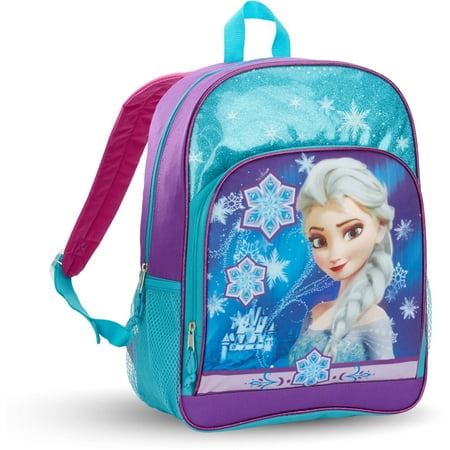
Anna and Babette got themselves dressed and ready to go. Anna without her blue tights. I'll run the laundry again when we get home. Charlotte MacKenzie is dressed and I put a change of clothes in her Elsa backpack. If Babette spills food on her dress, we'll just turn it around back-to-front for the photo.

We're out of hot water and I've still got to shower. I have no idea where the cat's got to.

My husband sits on the couch reading the paper. His three beautiful daughters perched all lady-like around him watching "Meet the Press" or some such on TV as though they're interested. He checks his watch, waiting all too obviously patiently. He doesn't dare ask how much longer I'll be.


This alt value should not be empty if you assign primary image

Thursday, November 24, 2016

A Man Called Ove -- Book Review

So would you like to know how to pronounce this man's name? http://bit.ly/2fd53xy  Check it out.

I think this is the best book I've ever read. Funny and beautiful and sad -- all tear inducing. That's the problem with reading. You read a really good book and get all teary-eyed and you can't see to get past the funny, beautiful, sad pages. At least when it's a movie, the movie goes on. Or an audio book.

But I read the book. My friend Lou handed the book to me after our walking group on Tuesday, November 22. Her only caveat was that I return the book to the library before December 5th. (Thank you, Lou!)

I am not a particularly fast reader, but this book I finished this morning -- two days after receiving it. Yes, it's that good.

A Man Called Ove (by Fredrik Backman, translated by Henning Koch) is about a difficult, lonely man who has lost the only person who ever understood him, his wife Sonja. He has decided to commit suicide and join her. Such a simple, honest decision. One would think.

But he is surrounded by humans. Totally incompetent, treacherous humans. These humans, completely innocent though they may be, inevitably bumble and stumble their way into his life and interfere with his plans.

Ove's attitude toward everything and everyone except his Sonja is summed up in the following paragraph. He's driving the everything and everyone in his Saab.

          "Ove looks at the group assembled around him, as if he's been kidnapped and taken to
     a parallel universe. For a moment he thinks about swerving off the road, until he realizes
     that the worst-case scenario would be that they all accompanied him into the afterlife.
     After this insight he reduces his speed and increases the gap significantly between his
     car and the one in front."

Backman's (or the translator's, I'm not sure who to credit here) language is pristine. He employs Hemingway's mot juste to say the most with the least and best words. And interestingly, anyway to me, he tells much of his story in present tense. The present part of the story. The rest he tells in the more commonly used past tense. (I know. I know. Only you grammar Nazis will even notice.)

Ove's present is explained as we read, discovering his past. As clearly and gracefully as a river winding its way through the countryside to the sea. And as inevitably.

I finished this book with my own cat annoyance snuggling in the throw on my legs (as long as I didn't try to pet him. My cat doesn't like to be petted. He bites. Rotten cat.)

Definitely Five Stars out of Five!